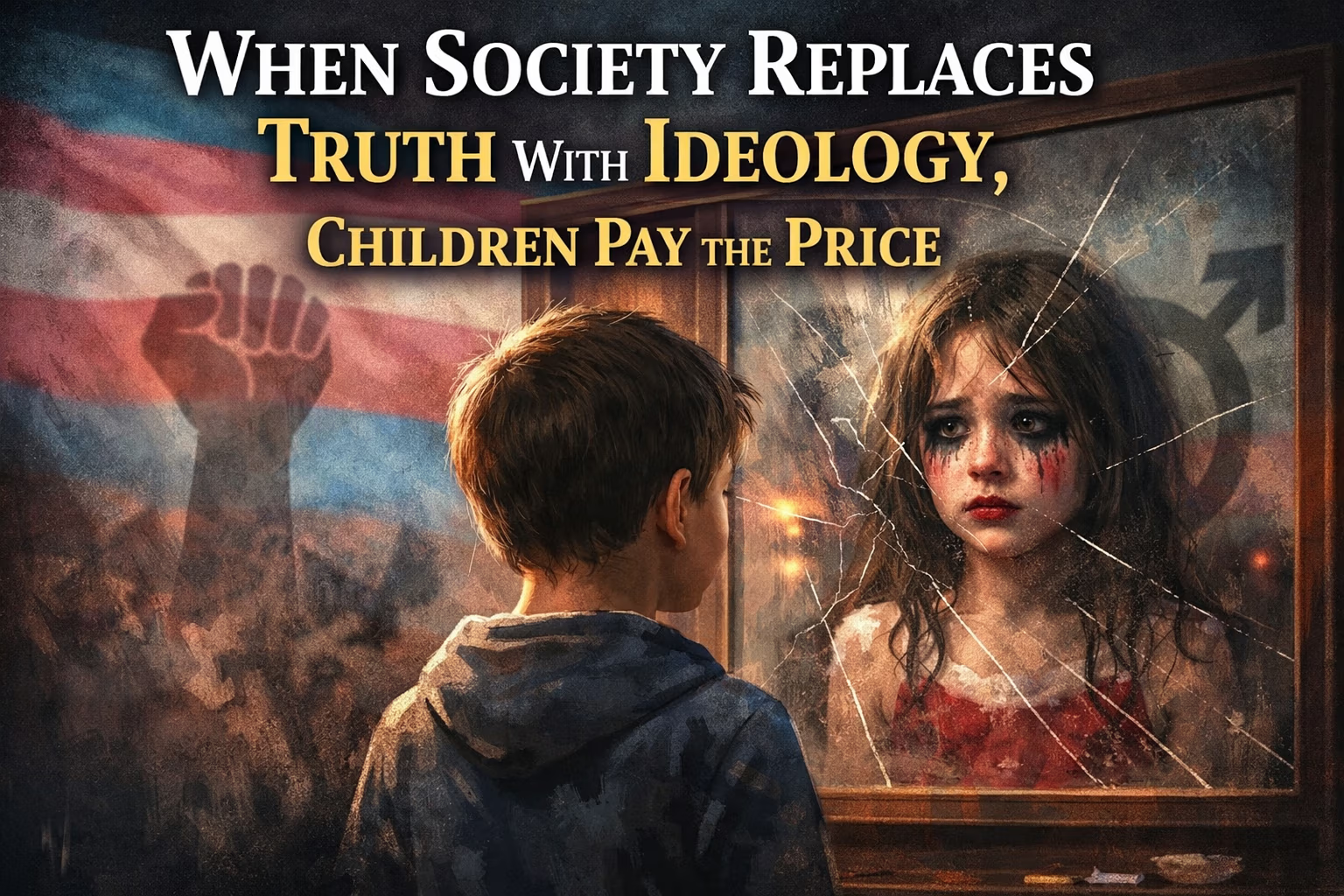
Why First Nations Stand to Benefit the Most in an Independent Alberta
This debate is usually framed in a way that avoids the one thing that actually matters: results.
This conversation is almost always framed to avoid the one thing that actually matters: outcomes.
Whenever Alberta independence is raised, we’re told it threatens First Nations, violates treaties, or risks chaos. That framing assumes the current system is working well enough that change itself is the danger. But if that were true, the results would not look the way they do today.
They do.
Under the existing federal framework, First Nations people experience dramatically worse outcomes than non-Indigenous Canadians across nearly every meaningful measure. Statistics Canada and federal health agencies show that First Nations people have a life expectancy approximately 8–12 years shorter than non-Indigenous Canadians, with gaps larger for men and in northern and remote regions. Suicide rates among First Nations are two to four times higher than the national average, and among Indigenous youth they are often reported at five to six times higher. Mental-health and addiction outcomes follow the same pattern: First Nations adults are roughly twice as likely to report mood disorders, anxiety disorders, and substance-use disorders, and Indigenous people are heavily overrepresented in overdose deaths, particularly in Western Canada.
Poverty statistics are even more damning. Indigenous people are far more likely to live in low-income households, and First Nations children living on reserve are more than four times as likely to live in poverty compared to non-Indigenous children. Overcrowded housing rates are several times the national average, directly contributing to poor health, instability, and limited educational outcomes.
These are not historical injustices frozen in the past. These are current, measurable outcomes, after more than a century of exclusive federal control over land, health, housing, education, and economic development.
So when people say “the treaties must be protected as they are,” what they are really defending is this system. And this system has failed, repeatedly, at enormous human cost. Why would anyone defend that?
That brings us to what the treaties actually say, not what people have been taught to believe they say.
The numbered treaties were not vague agreements to merely ‘share the land.’ The written text is explicit. Indigenous signatories ceded, released, surrendered, and yielded up their rights, title, and privileges to the land now and forever to the Crown. In exchange, the Crown guaranteed specific, enumerated rights: reserve lands set aside for use and benefit, annuities, education provisions, and the continued right to hunt, trap, and fish within the boundaries of the treaty territory, subject to regulation and except on lands required for settlement, mining, lumbering, or other purposes.
That balance matters.
The treaties did not grant fee-simple title to all land. They did not grant perpetual political sovereignty over the territory. They did not prohibit future governments, provinces, or nations from existing. And they did not say that political structures are frozen forever.
In fact, the treaties explicitly assumed Crown sovereignty and ongoing governance. Laws would be made. Jurisdiction would exist. Economic development would occur. Treaty rights were meant to exist within that framework, not override it.
History confirms this interpretation. Jurisdiction on this land has changed repeatedly without treaties being invalidated: from Indigenous stewardship, to the Hudson’s Bay Company, to the British Crown, to the Dominion of Canada, and later to the provinces. When Alberta was legislated into existence in 1905, there was no Indigenous consultation at all. No consent was sought. Yet the treaties remained intact. When land and resource control transferred to the provinces in 1930–31, the treaties remained intact. Courts upheld them every time.
That precedent matters. It proves a simple legal truth: treaties endure through changes in governance. They are with the Crown as a legal entity, not with a specific political configuration frozen in time.
An independent Alberta would not “erase” treaties by existing. It would inherit Crown obligations within its territory, just as provinces already do today.
There is also a reality people rarely want to acknowledge: most First Nations people do not own land in the same way other Albertans do. Reserve lands are held by the federal Crown “for use and benefit,” not as fee-simple property. That legal structure restricts access to capital, complicates housing, limits business development, and locks communities into dependency. Much of the poverty people lament is baked directly into this arrangement.
At this point, defenders of the status quo usually say there is “overwhelming Indigenous opposition” to Alberta independence. What that actually means is that chiefs, councils, and national or regional leadership organizations have issued statements. Those voices matter, but they are not neutral. These structures operate within and benefit from the existing federal system. Funding flows through them. Authority flows through them. Bureaucracy sustains them.
Meanwhile, ordinary Indigenous people quietly sign petitions every day because they want the same thing every other Albertan wants: opportunity, dignity, and a future that isn’t micromanaged by distant bureaucrats.
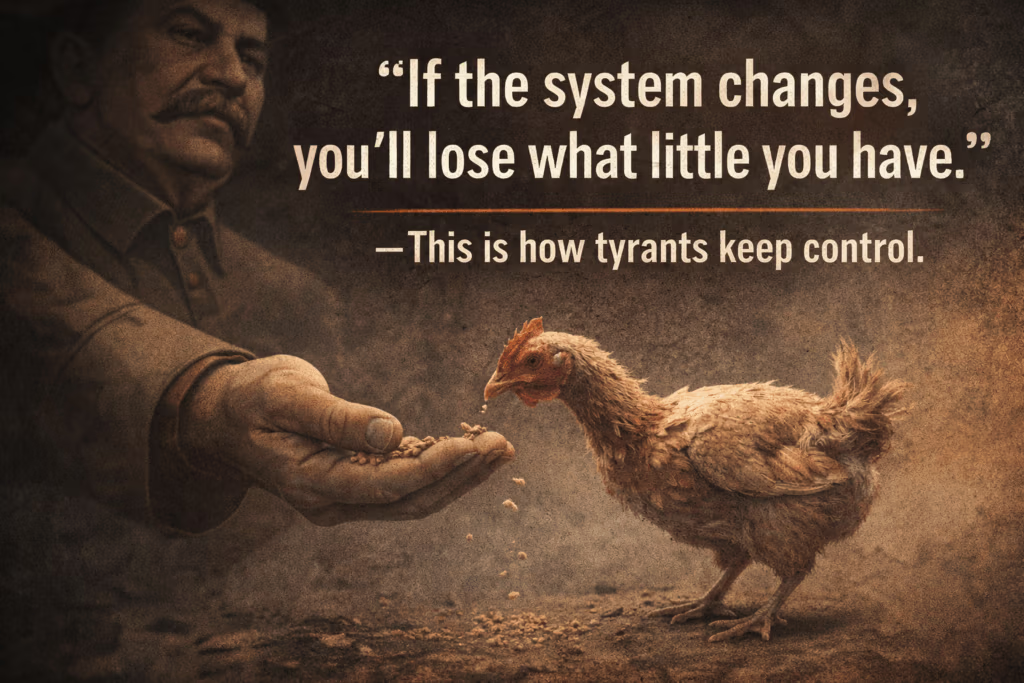
There’s a parable often attributed to Joseph Stalin. The story goes that a ruler plucks a chicken alive, then offers it food. Injured and terrified, the chicken follows the same hand that harmed it, because it has learned that survival comes only from that source. Whether the story is literally true is beside the point. It captures a psychological reality about control.
We’ve seen this dynamic play out in real life as well, most visibly in Venezuela, where people were warned that if the government changed, they would lose access to state food boxes. The message was blunt: without us, you starve. Fear kept people loyal to a system that hollowed out the economy and entrenched dependency.
That same logic is deployed here.
If the system changes, you’ll lose what little you have.
If Ottawa isn’t in control, things will get worse.
But this argument only works if the current “food box” is actually feeding people well. The statistics say it isn’t. Bare survival under dependency is not success. It is control.
Canada today still operates a race-based legal framework. Different governance rules, different land regimes, different tax treatment, different legal categories — all based on ancestry and status. Calling this protection does not change the fact that it is segregation written into law. Questioning whether permanent division and dependency should continue is not anti-Indigenous. It is asking whether equality, dignity, and self-determination actually mean anything.
Alberta independence does not erase Indigenous sovereignty. It expands choice.
If First Nations wish, an independent Alberta could honour the existing treaties exactly as written. Nothing in law prevents that. Alternatively, First Nations could choose to renegotiate treaty arrangements in a new political context, potentially securing outcomes far better than what Ottawa has delivered after more than a century of centralized control. Renegotiation is not betrayal. It is self-determination.
Nothing is imposed. Consent matters. Every Nation and Métis community chooses its own path. But choice is impossible when only one system is allowed to exist, especially when that system has demonstrably failed.
Defending the status quo means defending its results. And those results are clear.
For many First Nations people, Alberta independence is not a threat. It may be the first real opportunity in generations to stop chasing crumbs and start building a future.
-Christopher Scott